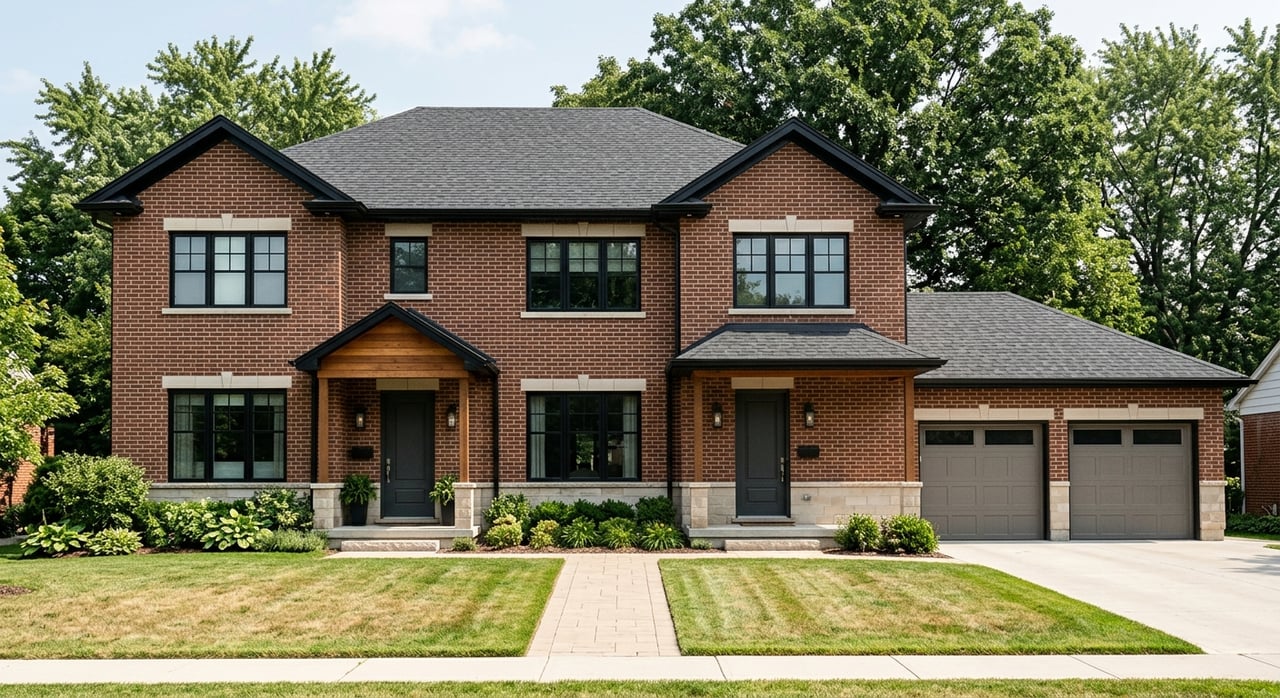
Germantown Investment Property Insights for Milwaukee Buyers
April 16, 2026
April 16, 2026
If you want rental property exposure near Milwaukee without jumping straight into the city, Germantown may already be on your radar. For many buyers, the challenge is figuring out whether this Washington County suburb offers steady long-term upside, workable rental demand, and numbers that still make sense. In this guide, you’ll get a practical look at Germantown investment properties, what the local housing mix suggests, and how to underwrite opportunities with clear eyes. Let’s dive in.
Germantown sits northwest of Milwaukee in Washington County and offers the kind of suburban setting many metro-area buyers look for when expanding into nearby markets. According to U.S. Census QuickFacts, the village has a population of 21,032, a median household income of $104,337, and a mean commute time of 22.3 minutes. Those numbers point to a relatively stable suburban income base with close access to the broader Milwaukee area.
The same Census profile shows 48.3% of adults hold a bachelor’s degree or higher, and the poverty rate is 3.2%. For you as an investor, that does not guarantee performance, but it does help frame Germantown as a market with solid household fundamentals. In many cases, that supports a long-term hold strategy more than a quick high-yield play.
A good investment plan starts with the local housing stock. In Germantown, the housing mix leans heavily toward larger homes and lower-density suburban product, based on the Village of Germantown Housing Affordability Report.
The village has 8,582 housing units. Of those, 75.9% are owner-occupied, 21% are renter-occupied, and 3.5% are vacant. Structurally, 63.9% are detached single-family homes, 10.0% are attached single-family units like duplexes or rowhouses, 1.9% are two-unit structures, and 22% are multifamily buildings.
That mix suggests a few likely paths for metro Milwaukee buyers:
Bedroom count matters too. The village report notes that 47.7% of units have three bedrooms and 22% have four or more. Most homes were built between 1970 and 2009, so you may find opportunities where cosmetic updates or systems review can make a meaningful difference to rental readiness and maintenance planning.
No investment market works without real renter demand. In Germantown, renter households tend to be smaller, which can shape the kinds of units that perform best.
According to the village housing report, the average renter household size is 1.99 people. About 40.9% of renter households are one-person households, and 33.9% are two-person households. The report also shows a roughly even split between family and nonfamily renter households.
For you, that means it is smart to avoid overly narrow assumptions about who will rent your property. Germantown appears to support a mix of smaller households and a portion of family renters, rather than one dominant renter profile. That can be useful when evaluating attached homes, smaller multifamily units, or right-sized single-family rentals.
Rent numbers matter, but so does affordability pressure. The village report places Germantown’s median monthly rent at $1,263, while Census QuickFacts shows a median gross rent of $1,310 for 2019 through 2023.
At the same time, 35.6% of renter households are considered cost-burdened, according to the village report. That is an important signal for underwriting. It suggests demand is present, but it also tells you not to assume unlimited rent growth or easy tenant replacement at any price point.
The village report lists a 5.1% rental vacancy rate, which falls within HUD’s historically cited healthy range of about 4% to 6%. In plain terms, Germantown does not look oversupplied today, but it also does not look so constrained that you can ignore vacancy in your projections.
This is where investors need discipline. Germantown may make sense as a suburban hold, but public data suggests it should be underwritten carefully for cash flow.
Census data shows a median owner-occupied home value of $356,700 and median gross rent of $1,310. That works out to a rough gross annual rent-to-value ratio of about 4.4% before property taxes, insurance, maintenance, vacancy, and financing. That figure is not a cap rate, but it is a useful first-pass screen.
Current portal snapshots point in a similar direction. The research report cites Zillow market data showing an average home value of $439,786 and average rent of $1,600, which again implies about a 4.4% gross rent-to-value ratio. For you, the takeaway is simple: Germantown is probably not the market to buy blindly for immediate cash flow.
Instead, it may be better viewed as:
Limited inventory can affect how quickly you need to move and how selective you can be. The research report notes that Zillow showed 46 homes for sale and 17 new listings as of March 31, 2026.
The report also cites Realtor.com’s January 2026 snapshot showing 63 homes for sale, 16 rentals, and a median 72 days on market, with homes selling at about asking price on average. While portal data is not a substitute for full MLS analysis, it does suggest a relatively balanced market rather than a deeply distressed one.
That matters because balanced markets often reward patience and preparation. If you are trying to buy an investment property in Germantown, your edge may come less from bargain hunting and more from strong underwriting, financing readiness, and knowing which property type best matches local demand.
One of the more interesting parts of the Germantown story is its projected growth. The village housing report projects population growth from 20,917 in 2020 to 24,110 by 2040, with households increasing from 7,818 to about 10,147.
The same report references longer-range SEWRPC projections that put Germantown near 31,500 residents and almost 13,000 households by 2050. It also notes that the village’s comprehensive plan is intended to accommodate growth and a wider mix of housing choices. For investors, that supports a reasonable long-hold thesis, though future supply should remain part of your analysis.
Growth can be positive, but supply matters. In 2024, Germantown approved one subdivision plat and issued 36 residential building permits for new single-family homes, according to the village report. It also recorded no new residential certified survey maps or condominium plats during that period.
The same report identifies 212 vacant parcels totaling about 701 acres zoned for residential development, plus 541 additional vacant parcels totaling about 10,450 acres with potential future residential use. For you, this means Germantown has meaningful long-term capacity for more housing. That can be healthy for the market, but it also means future competition should be part of your rent and appreciation assumptions.
If you are evaluating Germantown investment properties from Metro Milwaukee, use a process that stays grounded in local data. A few core checks can help you avoid buying based on broad assumptions.
Start with these:
Property taxes deserve special attention. The village notes that tax bills are mailed in mid-December and can be paid in two installments, but the real takeaway is that you should model actual parcel taxes directly. In a suburb where gross rent-to-value screens are already modest, small expense mistakes can materially change your returns.
For many Metro Milwaukee investors, Germantown can make sense if you want suburban exposure, a stable local income base, and long-term hold potential. It appears best suited to buyers who are comfortable with moderate yields, selective acquisitions, and careful expense management.
The strongest opportunities may come from buying the right property type at the right basis, not from assuming every Germantown rental will perform the same way. Single-family rentals, attached homes, and small multifamily properties may all have a place in your strategy, but each one needs to be tested against real local rents, vacancy, taxes, and condition.
If you want help evaluating suburban investment opportunities around Milwaukee, working with someone who understands both neighborhood dynamics and investor decision-making can save you time and costly guesswork. When you’re ready to talk through your goals, connect with Brynn Woll for a practical, data-informed approach to your next purchase.
Stay up to date on the latest real estate trends.

Brynn is committed to providing personalized and comprehensive real estate services, ensuring a seamless and successful experience for every client.
BRYNN WOLL
W63N706 WASHINGTON AVE CEDARBURG WI 53012