Fox Point Home Styles Every Buyer Should Know
May 14, 2026
May 14, 2026
Wondering why homes in Fox Point can feel so different from one street to the next? In a village known for tree-lined lanes, wooded lots, ravines, and Lake Michigan vistas, architecture is only part of the story. If you are buying, selling, or simply getting to know the area, understanding the home styles you are most likely to see can help you read a property with more confidence. Let’s dive in.
Fox Point is a small North Shore village of about 2.8 square miles with roughly 6,600 residents. Incorporated in 1926, it sits between Bayside and Whitefish Bay, with Interstate 43 along its western edge. The village describes itself through its natural setting, which matters because lot orientation, privacy, and daylight often shape how a home feels just as much as its style name.
Based on Wisconsin Historical Society property records and local landmark listings, Fox Point’s housing mix is best understood as a blend of mid-century ranches, Colonial Revival and Georgian Revival homes, and a smaller but notable group of contemporary and modernist houses. You will also find some earlier prewar styles, including Dutch Colonial Revival. Rather than one dominant look, Fox Point offers a layered architectural mix.
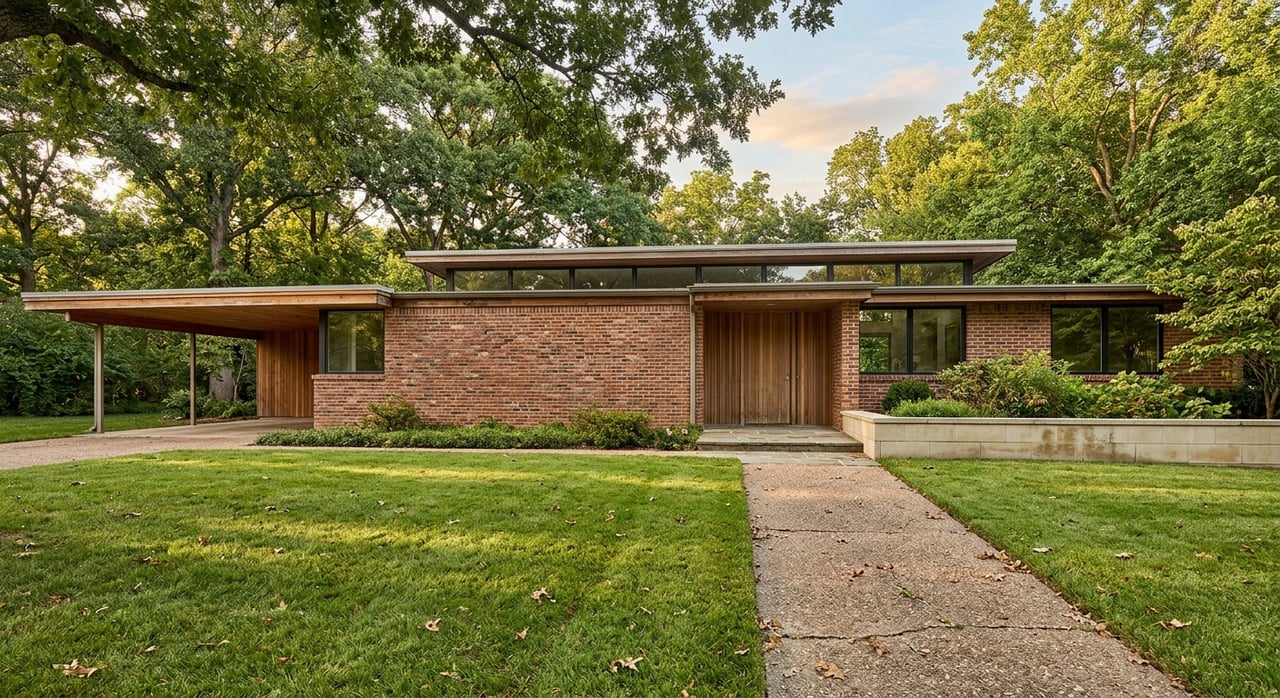
One of the clearest home types in Fox Point is the ranch. The Milwaukee County Historical Society identifies the 1952 Friedlander Residence as a representative example of the straightforward ranch houses designed by Willis and Lillian Leenhouts in Fox Point and nearby North Shore communities. That helps explain why ranch homes feel so woven into the area’s identity.
Surveyed homes on and near Lake Drive show the range within this category. Examples include a 1952 brick ranch with a hipped roof and board-sheathed gable peaks at 8335 N Lake Dr, a 1954 T-shaped contemporary-style ranch at 7623 N Lake Dr with stone veneer and a large picture window, and a 1951 contemporary-ranch hybrid at 6755 Holly Ct with Lannon stone, wide eaves, and large plate-glass windows.
In Fox Point, ranch homes often have a low, horizontal profile. You may notice attached garages, broad rooflines, and large windows that connect interior rooms to the yard. Compared with more formal house types, they usually feel casual and site-oriented.
That low-profile design makes sense in a village where mature trees, setbacks, and changing lot conditions play such a big role. Many ranch homes seem designed to sit into the landscape rather than stand apart from it. For buyers, that often translates to a relaxed exterior presence and practical everyday flow.
A Fox Point ranch may appeal to you if you want:
In local examples, the style often reads as approachable and functional. It can also feel very specific to the North Shore’s postwar residential growth.
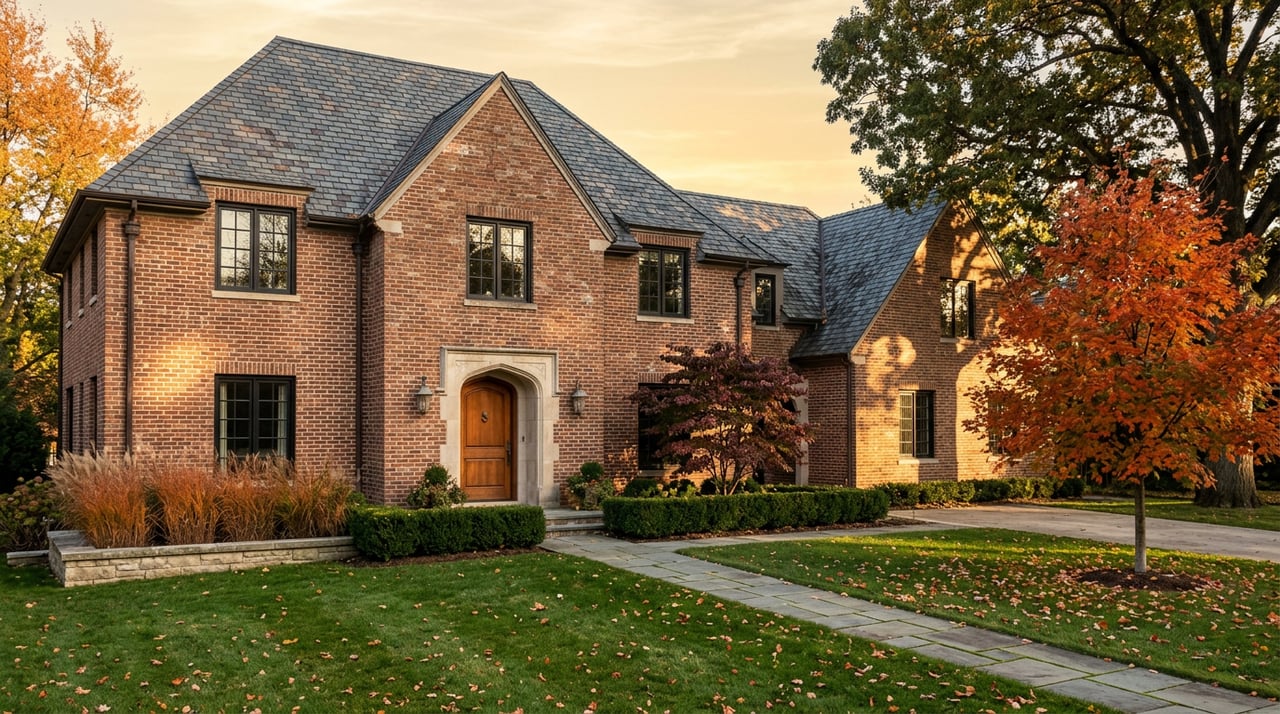
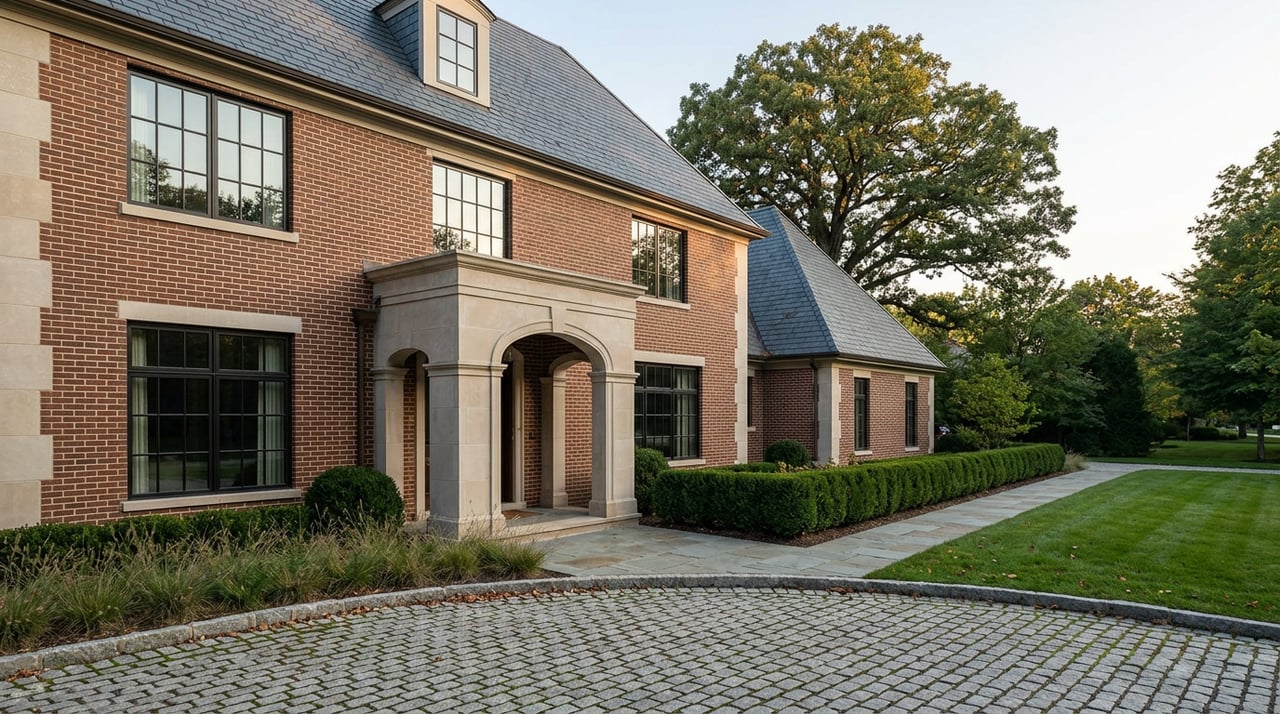
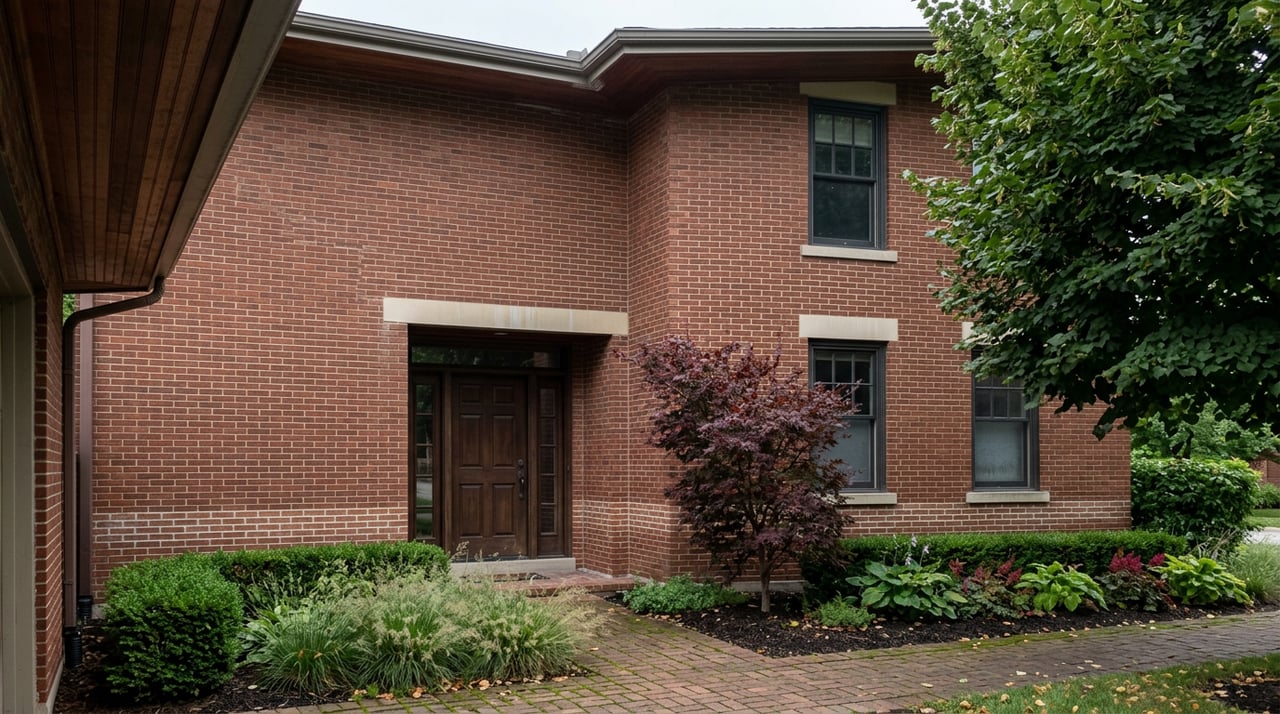
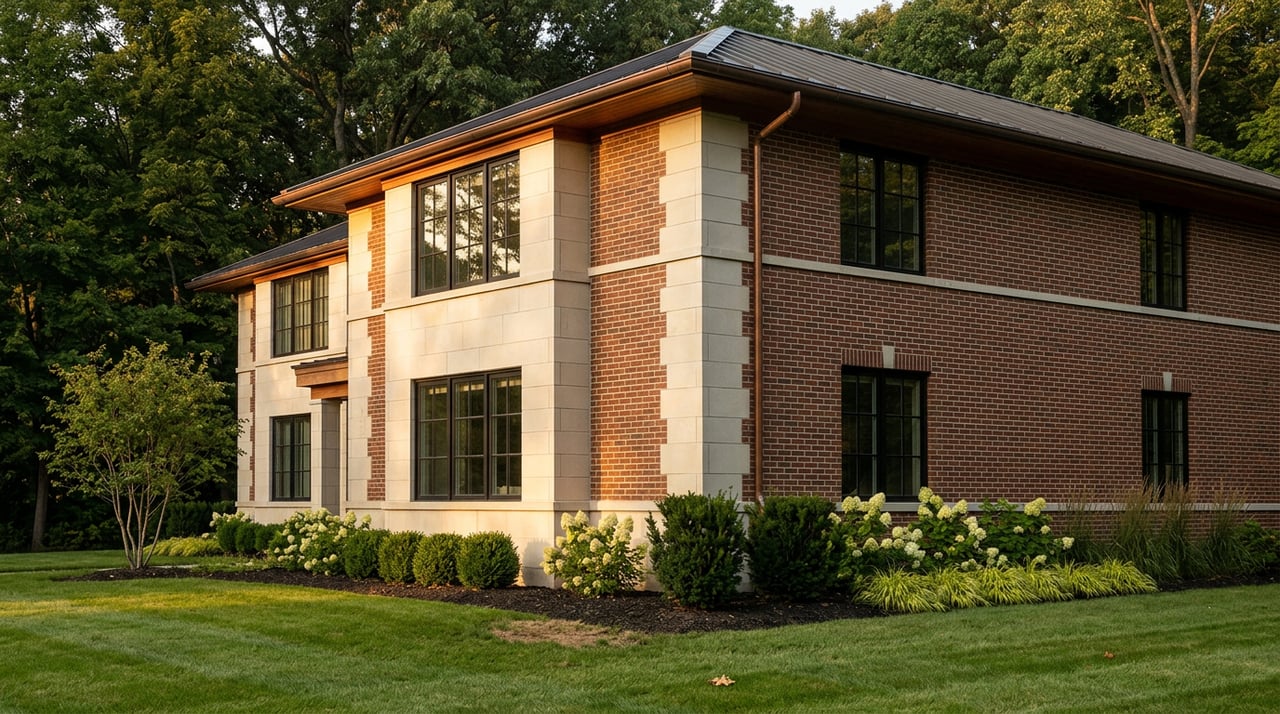
The other major architectural family in Fox Point is the colonial tradition. Wisconsin Historical Society records include examples from 1939, 1941, 1947, and 1964 with side-gabled forms, brick or stone exteriors, and more formal front entry treatments. Noted examples include homes at 7606 N Lake Dr, 7401 N Bridge Ln, 8325 N Lake Dr, 8001 N Lake Dr, and 705 E Green Tree Rd.
These homes usually create a different first impression than ranches. Where ranch houses tend to spread outward, colonials often feel taller, more symmetrical, and more centered on the front door. That contrast is one reason Fox Point can feel so visually varied.
In Fox Point, Colonial Revival and Georgian Revival homes often include:
This group also includes earlier variants. A 1927 Dutch Colonial Revival home at 6429 Santa Monica Blvd shows that prewar traditional styles are part of the village’s architectural story too.
Fox Point’s traditional architecture is not limited to inland streets. Chipstone on Club Circle Drive, a 1949 to 1950 red brick Georgian Revival house now used as a museum, shows that formal classical design also plays a role along the lake edge. That adds another layer to how the village developed over time.
For buyers, colonial homes often suggest a more traditional curb appeal and a more formal interior organization. If you are drawn to classic proportions and a stronger sense of arrival at the front entry, this style may be the one you notice first.
Fox Point also has an impressive modern design legacy for a village of its size. Local landmark records include the 1939 Brooks Stevens House, an Art Deco and modernistic design by Fitzhugh Scott with a Y-shaped plan, flat roof, cement walls, and aluminum windows. The 1946 Frank Lloyd Wright Adelman House adds another important chapter, with its long, low profile and concrete-block-and-cypress construction.
These homes help show that Fox Point is not just a place for traditional architecture. It also has a meaningful history of architect-designed modern homes that value innovation, setting, and light.
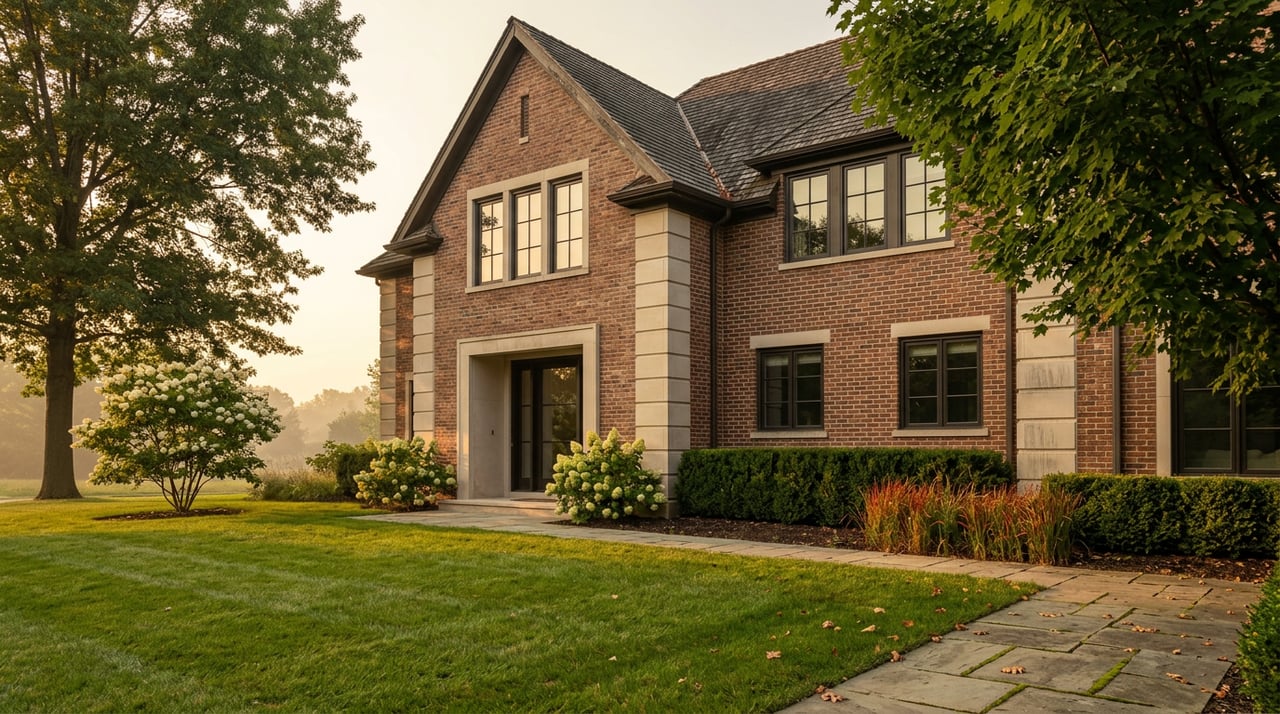
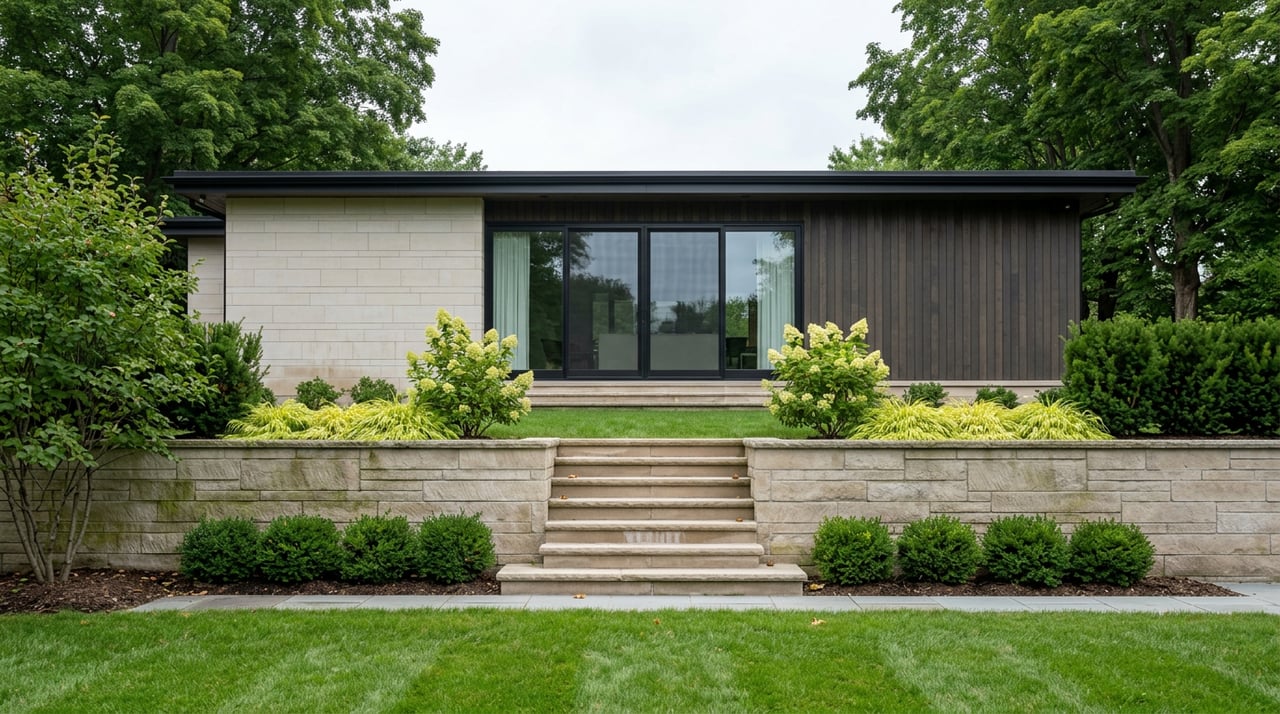
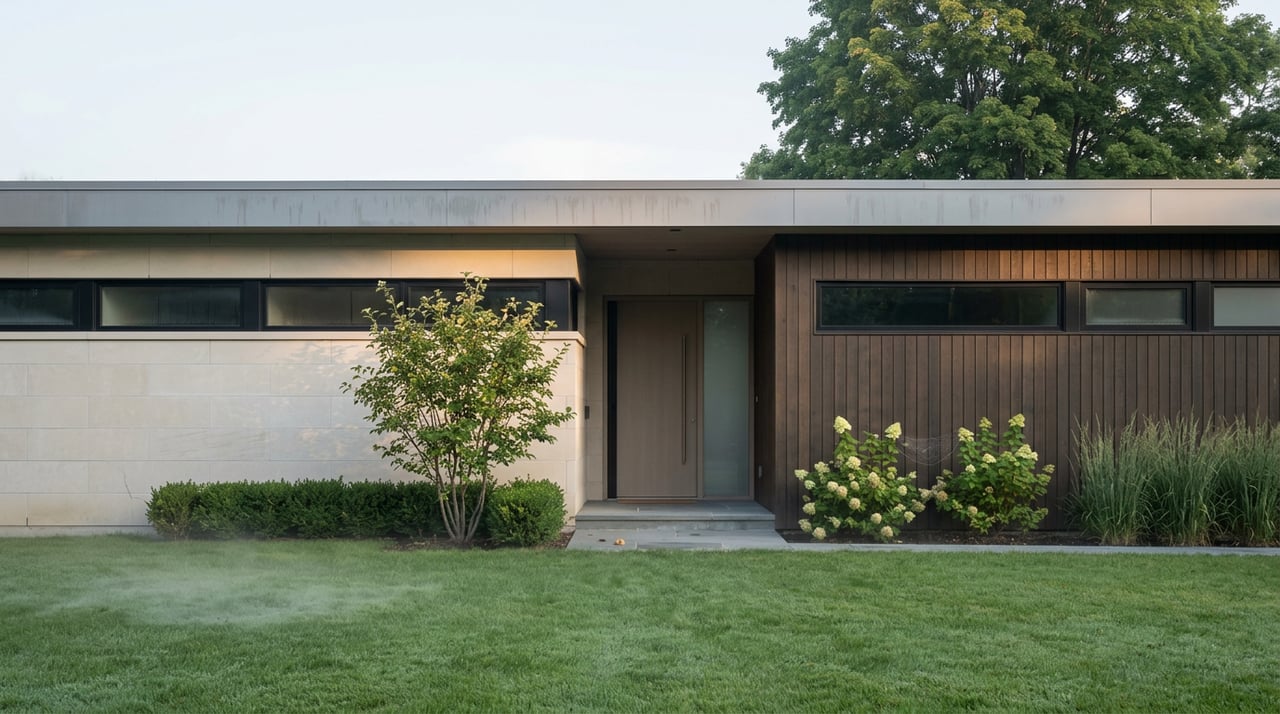
Wisconsin Historical Society records also document several Contemporary-style homes in Fox Point, including 7431 N Lake Dr from 1955 and 921 E Calumet Rd from the 1960s. Features noted in these homes include hipped roofs, stone veneer, attached garages, and broad areas of glazing. Some properties, like 6755 Holly Ct, blend contemporary and ranch characteristics.
In practical terms, contemporary homes in Fox Point often prioritize views, openness, and privacy over strict symmetry. Large windows, low-slung forms, winding drives, and foliage screening can all shape the experience. In a lake-adjacent setting, that design approach feels especially fitting.
You may be drawn to a contemporary home if you value:
These homes can feel especially compelling on wooded or lake-oriented parcels. In Fox Point, the architecture often works with the landscape rather than trying to dominate it.
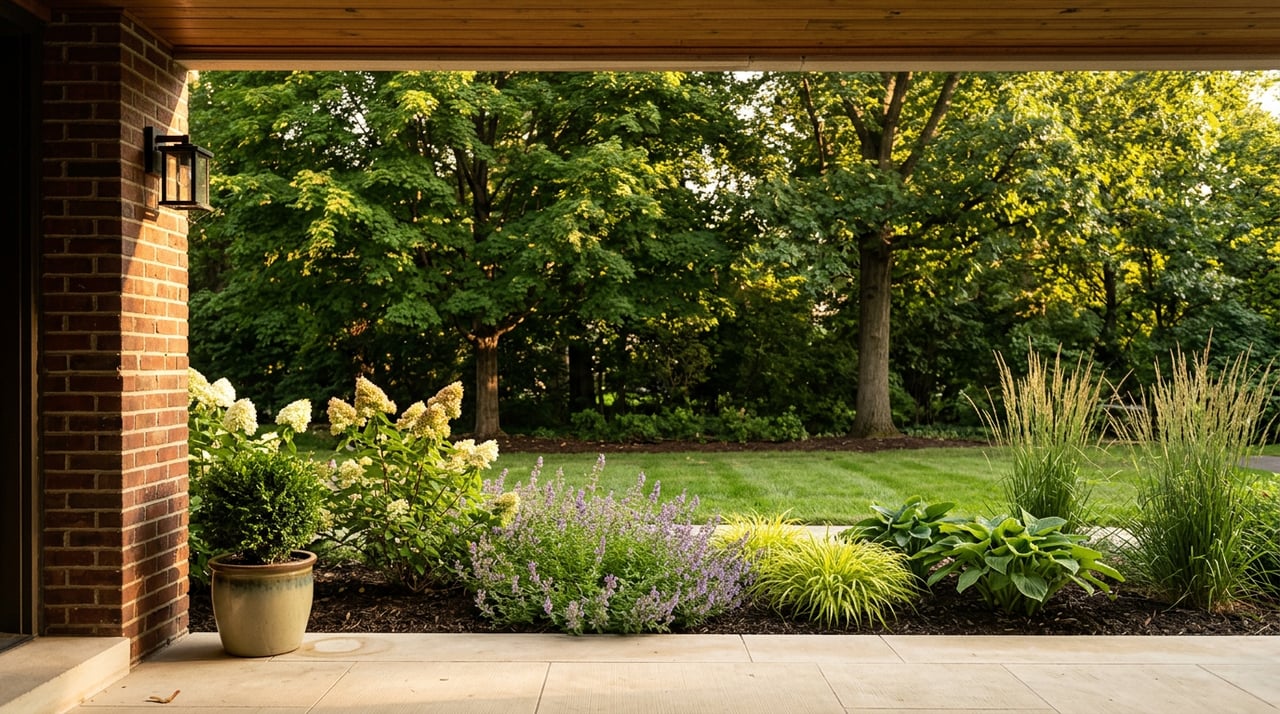
In Fox Point, style labels only tell part of the story. The village emphasizes tree-lined lanes, wooded areas, ravines, and lake vistas, and those site conditions influence how homes are designed and experienced. A ranch, colonial, or contemporary home may feel very different depending on how it sits on the lot.
That means buyers should pay close attention to more than the front elevation. Window placement, garage integration, setbacks, tree cover, and how the house captures daylight can matter just as much as whether the listing calls it colonial or ranch. In a setting like Fox Point, architecture and landscape work together.
Fox Point is best understood as a style-rich North Shore village, not a place defined by one single house type. The documented housing stock stretches from a 1927 Dutch Colonial Revival home to 1950s ranches and later contemporary and colonial-revival examples. That variety gives you real choice, but it also makes it helpful to know what you are looking at.
A simple way to sort your preferences before touring is to think about how you want a home to live day to day. Ranch homes often fit buyers looking for one-level living and a low-key suburban feel. Colonial homes tend to appeal to buyers who want traditional curb presence and a more formal layout, while contemporary homes often attract those who want light, openness, and a stronger connection to the lot or lake setting.
If you own a home in Fox Point, understanding your home’s architectural lane can help shape how it is presented. Buyers do not just respond to square footage. They respond to design, setting, and how clearly a home’s strengths come through in photos, marketing, and showings.
A ranch may be most compelling when its easy flow, large windows, and connection to the yard are highlighted. A colonial may benefit from an emphasis on symmetry, entry presence, and timeless materials. A contemporary home often shines when marketing captures light, privacy, and the relationship between the structure and the site.
When your marketing reflects what makes the home architecturally distinct, buyers can understand it faster and picture themselves there more easily. In a market like Fox Point, that kind of clarity matters.
If you are planning a move in Fox Point and want guidance grounded in North Shore experience, Brynn Woll can help you understand what makes a property stand out and what today’s buyers are noticing.
Stay up to date on the latest real estate trends.

Brynn is committed to providing personalized and comprehensive real estate services, ensuring a seamless and successful experience for every client.
BRYNN WOLL
W63N706 WASHINGTON AVE CEDARBURG WI 53012