Mequon vs Cedarburg Housing: What Buyers Should Know
May 21, 2026
May 21, 2026
If you are torn between Mequon and Cedarburg, you are not alone. Many buyers start this search assuming one city is clearly more competitive, more expensive, or more practical, only to find the choice is much more nuanced. The good news is that once you understand how the housing, lot sizes, daily lifestyle, and long-term fit differ, the decision gets a lot clearer. Let’s dive in.
At a glance, the two markets are closer than many buyers expect. In March 2026, Redfin reported a median sale price of $562,500 in Mequon and $589,000 in Cedarburg, with median days on market at 38 and 39 respectively.
That tells you something important. If you are choosing between these two cities, the real difference is usually not raw market speed. It is more about the kind of home, lot, and lifestyle you want.
Official valuation data also shows a difference in how each city tends to be positioned. Mequon’s 2024 median home value estimate is $501,600, while Cedarburg’s city housing review lists a median owner-occupied value of $372,500 based on 2020 Census data.
These figures are not directly comparable to current sale prices, but they do reinforce the broader pattern. Mequon generally trends higher on official valuation metrics, while Cedarburg offers a more mixed housing profile.
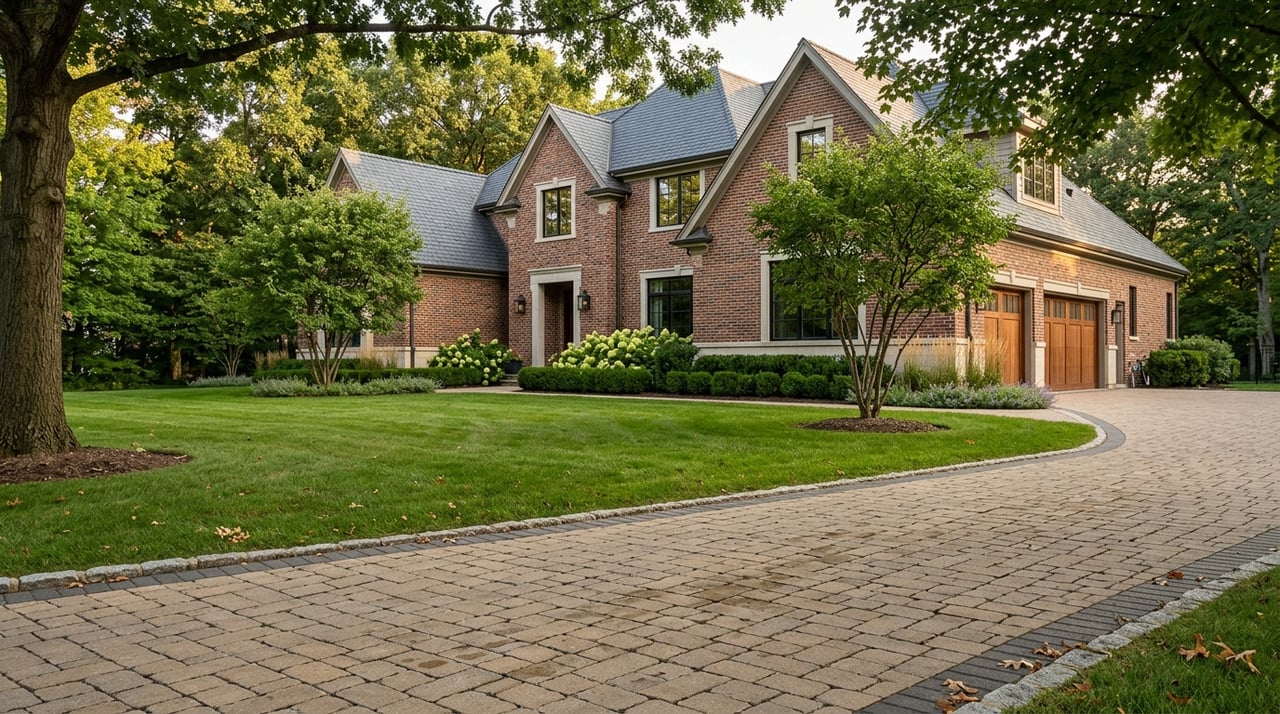
If space is high on your list, Mequon often stands out first. The city’s planning framework is centered on low-density detached housing, including residential categories with 5-acre minimum rural residential land, 1.5- to 5-acre transitional residential land, and 1- to 1.5-acre urban residential land.
In practical terms, that tends to mean larger lots, more separation between homes, and a less compact neighborhood layout. You are more likely to find private settings and conservation-style neighborhood patterns than tightly arranged in-town blocks.
Mequon is also more owner-heavy overall. The city reports an owner-occupied rate of 86.4%, which points to a housing base that leans strongly toward long-term ownership.
If you are looking for a single-family home with room to spread out, Mequon often aligns well with that goal. It can be especially appealing if privacy and lot size matter more to you than being close to a dense downtown setting.
Mequon also has a structured review process for exterior work. The city’s Architectural Review Board must approve new construction, additions, exterior changes, and several other residential items.
That does not make Mequon harder to buy in, but it is something to factor into your plans. If you expect to build, expand, or make visible exterior updates after closing, it helps to understand that review timeline early.
Cedarburg offers a more varied housing mix. According to the city’s housing review based on the 2020 Census, 64% of occupied units were single-family detached homes, 8% were duplex-type structures, and 28% were in multi-family buildings.
That mix can give you more variety in both home style and setting. Compared with Mequon, Cedarburg tends to offer more attached housing, more vintage homes, and more smaller-lot options.
The age of the housing stock also shapes the feel of the city. Cedarburg reports that 57.3% of its housing units were built before 1980, which helps explain why many buyers associate the area with established neighborhoods and older homes with character.
Planning documents also support a more urbanized pattern in certain areas. One city planning site describes medium-density residential development with target lot sizes of 8,400 to 12,000 square feet, and the city’s 2025 housing affordability report notes recent approvals for duplex townhomes, a single-family plat, and infill lots.
Historic preservation is a real part of Cedarburg’s housing story. The city identifies the Washington Avenue, Columbia, and Hamilton historic districts, along with a Historic Preservation Overlay Zoning District.
For you as a buyer, that can be a plus if you value older architecture and established character. It can also mean added review for exterior changes in certain areas, which may affect renovation scope or timing.
One of the clearest differences between Mequon and Cedarburg comes down to how each place feels day to day. Mequon generally leans toward open land, wider spacing, and lower-density planning.
Cedarburg usually feels more compact in comparison. You may see smaller lots, a more traditional street pattern, and a closer connection between housing areas and the downtown core.
Neither is better across the board. It depends on whether you picture yourself wanting breathing room and privacy or a more connected, in-town rhythm.
If your daily routine depends heavily on driving, Mequon may have an edge for convenience. The city says Interstate 43 runs through Mequon, with nearby access to I-94, Highway 60, Highway 100, Highway 167, and Highway 190, along with Ozaukee County transit and shared-ride taxi service.
That road network gives Mequon a transportation-forward feel for buyers who commute primarily by car. If getting on and off major routes quickly matters to you, this can be a meaningful advantage.
Cedarburg is also well connected, but in a different way. The city says it is about 20 miles north of Milwaukee near I-43 and Highway 60, and it includes a segment of the Interurban Trail running from Pioneer Road to Bobolink Avenue.
Ozaukee County notes that the 30-mile paved trail connects Mequon, Thiensville, Cedarburg, Grafton, Port Washington, and Belgium, and it can function as a commuter route. If you like the idea of trail access as part of your daily mobility, Cedarburg may stand out more.
Mequon and Cedarburg both offer access to outdoor amenities, but the scale and feel are different. Mequon emphasizes open space in a big way, with 25 parks and 1,181.7 acres of park, recreation, and open-space sites.
Mequon Nature Preserve alone spans 444 acres and includes walking trails, an observation tower, and environmental education features. That reinforces the city’s broader identity around land, nature, and lower-density living.
Cedarburg owns 34 parks and open spaces totaling 146 acres. While the acreage is smaller, the city pairs those spaces with a denser historic downtown district within two blocks of Washington Avenue.
That combination creates a different kind of lifestyle. In Cedarburg, the draw is often less about expansive open land and more about having parks, downtown destinations, and local activity in closer reach.
For buyers who want an active village-center feel, Cedarburg has a distinct advantage. The city says more than 175,000 visitors attend its four annual festivals, and the downtown business corridor is listed on the National Register of Historic Places.
If you enjoy a compact downtown pattern with regular events and a strong sense of place, Cedarburg may feel more aligned with what you want. If you prefer a more dispersed suburban-rural pattern, Mequon may feel like a better fit.
From a resale standpoint, both cities remain competitive. With March 2026 median days on market at 38 in Mequon and 39 in Cedarburg, current resale speed looks very similar.
That means future resale is likely to depend more on the specific property than the city name alone. Condition, lot size, home style, and exact location will usually matter more than broad assumptions.
Mequon’s planning documents consistently emphasize preserving rural and small-town character while discouraging suburban development in rural areas. That can support scarcity for larger-lot homes because the city is less likely to add a large amount of similar inventory quickly.
Cedarburg’s mix of historic districts, preservation overlay zoning, and older housing stock can support demand for character and walkable settings. At the same time, buyers should go in knowing that exterior changes in some areas may involve additional review.
If you are deciding between Mequon and Cedarburg, it helps to focus less on which city is supposedly better and more on how you want to live. The markets are close enough that your daily experience should carry more weight than simple price headlines.
Mequon may be the better fit if you want:
Cedarburg may be the better fit if you want:
In the end, both communities can be excellent choices for the right buyer. The key is matching your purchase to the lifestyle, home type, and long-term plans that matter most to you.
If you want help comparing specific neighborhoods, home styles, or available listings in Mequon and Cedarburg, Brynn Woll can help you sort through the details and make a confident move.
Stay up to date on the latest real estate trends.

Brynn is committed to providing personalized and comprehensive real estate services, ensuring a seamless and successful experience for every client.
BRYNN WOLL
W63N706 WASHINGTON AVE CEDARBURG WI 53012