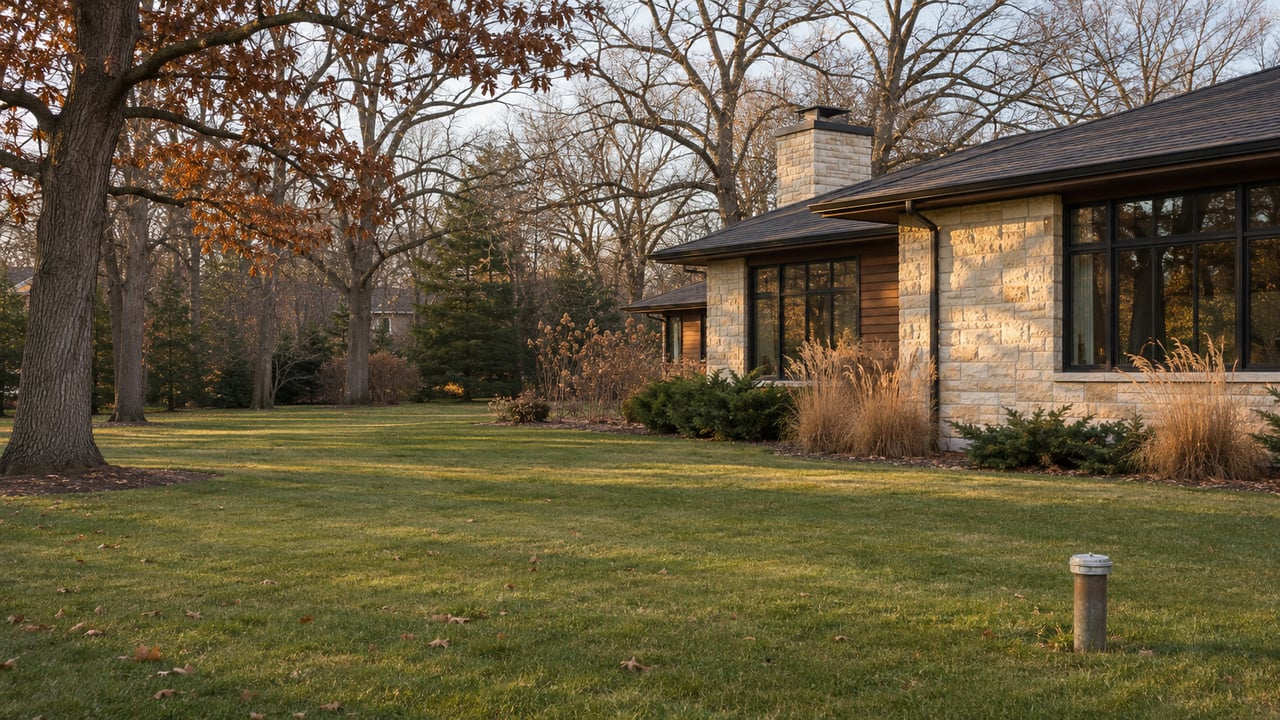
Why So Many Southeast Mequon Homes Still Run on Private Wells
November 26, 2026
Southeast Mequon is the most suburban part of the city, and its sewer and water service don't match up. In the City's October 2026 issue of the Mequon Beacon, Mequon Water Utility director Jim Voigt gives the current numbers: about 8,000 sewer customers in the southeast corner and about 3,400 water meters in Mequon. That puts roughly 43 percent of southeast homes on city water.
So when you tour a home on a sewered street in southeast Mequon, the odds are better than even that it pumps its own water. The City says any property can have both services, water only, sewer only, or neither, and that quite a few properties still use a private well or a water trust. The split traces to decisions made in the 1980s, 1998 and 2009, and it is why two Mequon homes at similar prices can come with very different utilities.
Mequon started out rural, with large lots and a private well on each one. As the city grew, it developed in two directions: a denser, more suburban southeast corner, and a lower-density, more rural west and north.
In the 1980s, the Common Council decided new southeast subdivisions would be built as "community wells," with water mains, hydrants and laterals installed. That way they could connect to a public water utility if the City ever created one. In other words, the pipes went into the ground before there was a utility to connect them to.
One of those systems, the LeMont Water Utility, ran into financial trouble in the 1990s. It served about 500 homes east of the river around Donges Bay Road, and the Wisconsin Department of Natural Resources made the City take it over. The City didn't want to run a water utility, so it sold LeMont to Wisconsin Gas, which later became We Energies, in 1998.
The local aquifer had been dropping for about a decade, so the City made it a condition of the sale that the buyer bring in treated Lake Michigan water. We Energies signed supply contracts with Milwaukee Water Works and the North Shore Water Commission. Over the next decade it connected most of the subdivision well systems in Mequon and nearby villages, growing the utility from about 500 meters to almost 3,000.
Around 2009, utility customers worried about rising rates asked the City to buy the utility back. Knowing most residents were on private wells, the City worded the referendum so the utility would be voluntary. It passed, and the City bought the utility back from We Energies.
Since then the utility has grown from about 3,000 meters in 2009 to just over 4,900 in 2025, and it added parts of River Hills as a customer in 2024. Southeast Mequon still has far more sewer customers than water meters.
The City's own planning numbers show the gap. The water utility master plan from October 2023 estimated that 44.9 percent of residential-equivalent units in the water service area were connected. Another 11.8 percent sat on a water main and weren't using it. Those figures are three years old and count units rather than houses. Still, they show a meaningful number of homes with a city main out front and a private well in the basement.
Voigt says the utility has no trouble with supply or aging pipes. It has plenty of Lake Michigan water and a system "decades younger than that of surrounding utilities." He told the Mequon Beacon that the biggest challenges are "how to attract new customers" and writing policies for a young, growing utility. All customers are on one combined system. Mequon and Thiensville get water mainly from Milwaukee Water Works, and Bayside and River Hills customers get North Shore Water Commission water.
For 2026, the City's water utility planned for 75 new customers, mainly in the Swan Ridge, Highland Meadows, Eastbrook, Enclave and The Grove developments. The water main extensions proposed for the 2026 fiscal year are Enclave Phase IX, The Grove Phase 2, Burr Oak Estates and a second Milwaukee Water Works connection.
That second connection matters in Swan Ridge. Voigt told the Beacon that the utility's biggest short-term goal is to loop the second Milwaukee Water Works meter pit, which serves the Swan Ridge subdivision, into the rest of the system. The loop was approved for this year. A developer is also looking to extend a water main in the area, which could change the loop's route significantly, so the utility is waiting to see how that design develops.
For a buyer, this means a newer home in one of those named developments is likely to come with city water already in place. An older home a mile away, on a street laid out for a community well in the 1980s, may have the main and the hydrants without the connection. If you're weighing a newer build against an older home on a larger lot, the comparison also covers how the house gets its water. Lot sizes in this part of the city vary for reasons of their own, which we covered in our post on how Mequon builds on lots a third the size of its one-acre rule.
City water and sewer each come with a quarterly bill, and the City publishes both rate sets with a date on each.
The Mequon Water Utility's rates in its tariff with the Public Service Commission of Wisconsin are dated effective December 18, 2023. Charges are billed quarterly: $31.32 for a 5/8-inch meter and $30.15 for public fire protection, plus $5.29 per 1,000 gallons for the first 150,000 gallons each quarter. The two fixed charges add up to $245.88 a year before any water is used.
Sewer rates come from the City's fee schedule dated November 10, 2026. The quarterly flat charge is $92, or $368 a year, and the volume rate is $9.028 per 1,000 gallons.
Connecting an existing home to city water has no single posted price, so the cost of a home that sits on a main but runs on a well depends on the address.
These figures are general information, not legal, tax or financial advice. Please confirm what applies to a specific property with the City and the right professionals.
Since neighboring homes can have different setups, the City recommends checking the specific parcel rather than assuming from the neighborhood. Its connection page links to a Sewer Service Area Map 2026 and a Water Service Area Map 2026. According to Voigt, well owners call the utility periodically, and staff can quickly tell whether service is available in their area and explain how to connect.
The answer can affect an offer. A home on a main with a private well has a connection cost that depends on the address. A home already on city water comes with the quarterly charges above. A home on a well in the rural west or north may have no main nearby at all. These are three different purchases, and the listing price doesn't show which one you're looking at.
Does a sewered home in Mequon also have city water? Not necessarily. Based on the utility's current counts, about 43 percent of homes in sewered southeast Mequon are on city water.
Where does Mequon's city water come from? It's treated Lake Michigan water, bought from Milwaukee Water Works and the North Shore Water Commission. Mequon customers get mostly Milwaukee Water Works water.
Is city water reaching more neighborhoods? Yes, mainly through new developments. The City planned for 75 new customers in 2026 and proposed four water main extensions for the year.
How a Mequon house gets its water and where its sewer connects changes how its price compares with the house down the street. If you're comparing southeast Mequon homes or wondering how your home's water and sewer setup will look to buyers, Brynn Woll can help you check the utilities and price it out. Schedule a call, or start with your instant home valuation.
Stay up to date on the latest real estate trends.

Brynn is committed to providing personalized and comprehensive real estate services, ensuring a seamless and successful experience for every client.
BRYNN WOLL
W63N706 WASHINGTON AVE CEDARBURG WI 53012