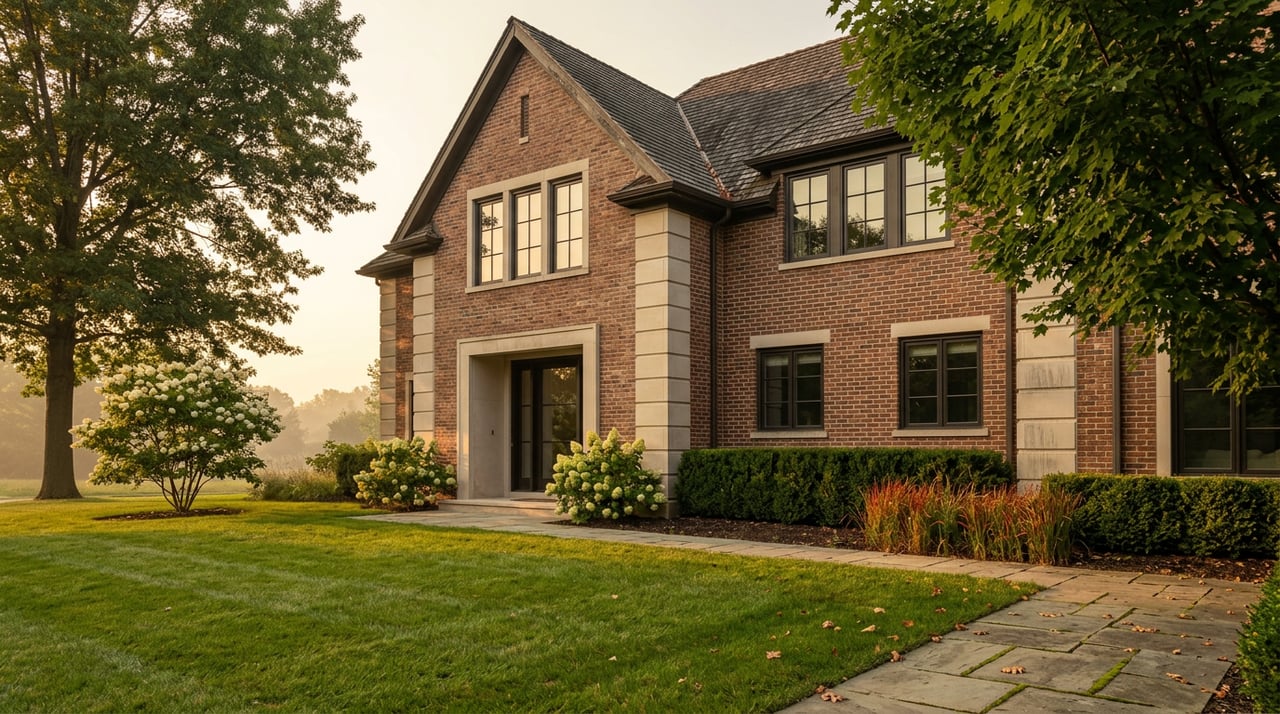
How Mequon One-Acre Zoning and TDR Shape Lot Sizes
August 27, 2026
August 27, 2026
In 2026, the City of Mequon approved a nineteen-lot subdivision on sixteen and a half acres immediately north of 8440 W. Donges Bay Road, averaging well under an acre per lot. A few miles away, near the Mequon Nature Preserve, custom builders are still putting up single homes on lots running 1.6 to 3 acres. Same city. Same base zoning code on paper. A lot-size gap that isn't explained by builder preference alone.
If you're comparing Mequon subdivisions right now, you've probably assumed the difference is builder taste or price point. It isn't, or not entirely. Mequon has run an active market in development rights since 2005, and the city approved another round of it this year. Understanding how that market works changes how you should read a subdivision's lot size before you decide what it's worth.
Mequon's baseline residential zoning in much of the city is R-3, listed in the city's own ordinance language as "Residential 1-Acre." That's the rule most buyers have heard about, and it's real. It's also not the whole picture, because the city built a formal exception into its zoning code two decades ago, and that exception is still being used on active subdivisions today.
In April 2005, Mequon adopted what the city calls a Transfer of Development Rights, or TDR-PUD, overlay. The goal was to protect farmland, rural open space, scenic views, and natural areas, particularly in roughly 2,000 acres of unsewered land in the northwest and north parts of the city. Rather than simply downzoning that land and calling it done, the city built a mechanism that lets it move.
The city designed the system so total build-out population doesn't increase. Density isn't created out of nothing. It's relocated from land the city wants to keep open to land the city has already decided can absorb more houses.
Much of the sending-side land sits near the Mequon Nature Preserve, which the city has been assembling since 2002 with a goal of 640 acres. By 2005, the city had already secured 408 acres and controlled roughly 100 more, and that same year it struck an agreement to preserve two TDR sending sites east of the Preserve totaling 112 acres. The rural character you see driving past the Preserve corridor isn't an accident of low demand.
This isn't a program that quietly faded after 2005. The city's ordinance log shows it in active use this year. Ordinance 2026-1690, approved in 2026, rezones land from R-3 with a Central Growth Overlay to R-3/TDR/PUD specifically to allow a 19-lot subdivision on 16.5 acres immediately north of 8440 W. Donges Bay Road. The approved plan has 19.
You can see the effect of this program just by comparing what's currently for sale.
Near the Nature Preserve corridor, custom builders working scenic pockets toward Cedarburg and Thiensville have been putting up estate product on lots running roughly 1.6 to 3 acres, with finished homes commonly landing in the $1.5 million to $2.5 million range. This is sending-adjacent land. Big lots, low density, prices that reflect scarcity of usable acreage.
On the other side of the ledger, Veridian Homes' newer phases inside the Mequon Preserve master plan, built out mostly on standard suburban lots west of the city near Preserve Parkway and Wauwatosa Road, have been selling spec homes and quick-move-ins from roughly $730,000 into the mid-$800,000s for 2,400 to 2,900 square foot homes. Ordinary lot sizes, ordinary suburban density, and a price point built for move-up buyers rather than estate buyers.
A decade earlier, Mequon's central growth zoning district produced an even more extreme version of this split, and the builder was the same one. The Mequon Common Council approved a Veridian Homes rezoning request for a 56-lot cluster development on 51 acres in the 10700 and 10800 blocks of Wauwatosa Road, with lots as small as one-third of an acre, and the city's community development director at the time said the homes would carry prices starting around $400,000. Nearby, the same builder's Estates at Mequon Preserve added a separate 76-lot subdivision on 64 acres at Wauwatosa and Donges Bay roads. Mequon's one-acre reputation was never a citywide floor. It was always a default that specific rezonings could override, and one builder has now worked both sides of that default in the same corridor for a decade.
Land pricing across Mequon bears this out in a way that surprises a lot of buyers. Current land listings citywide, spanning parcels of varying size, average around $253,000 per acre. A separate look at land and farm parcels advertised at roughly an acre each, taken this past winter, priced closer to $456,000 per acre. The larger, less-developed acreage, the kind that typically sits in TDR sending territory, trades for close to half the per-acre price of a small, single building lot.
That gap is mostly a sewer connection, road frontage, and an approved lot line, not a meaningful difference in soil quality or view.
Not every preserve-adjacent proposal in Mequon runs through a formal TDR transaction, and one currently in front of the city shows what happens when it doesn't. In March 2026, Mequon's Committee of the Whole took up a proposal from Miller Marriott Constructions for 87 single-family lots on a 107.1-acre site west of Baehr Road, adjacent to the 12-acre Lily Lane Nature Preserve. At roughly one lot per acre, this plan doesn't lean on transferred density the way the Donges Bay Road project does. What it does show is that land next to a protected preserve never moves through the process as a simple by-right subdivision. City staff spent real time weighing whether sewer infrastructure should transfer to the Mequon Sewer Utility, which already operates twenty-three lift stations, or whether the developer should install a private system serving only that project, with private wells proposed for lots outside the service area. Being near the Preserve means every acre gets negotiated, whether or not development rights change hands.
The same pattern is showing up just outside city limits, too. Mequon holds extraterritorial zoning authority over land in the neighboring Town of Grafton, and 2026 brought two rezonings there: a 35.5-acre agricultural parcel split into a one-acre lot and a roughly 34.5-acre remainder, and a 20-acre-minimum agricultural tract converted into a 112-lot subdivision. Land at the edge of Mequon's reach is being unlocked the same way land inside it has been for more than two decades.
If you're comparing two Mequon subdivisions with different lot sizes, a few questions are worth asking before you assume the smaller lots are simply a cheaper builder's choice:
None of this changes whether a given home is a good fit for your family. It does change how you should read the lot size on the listing sheet.
Does a smaller TDR-based lot mean lower resale value down the road? Not necessarily. The Mequon Preserve phases built on standard lots have held a steady move-up buyer market in the $730,000 to $850,000 range. Lot size is one input into value, not the only one, and PUD-approved subdivisions often come with shared amenities or open space commitments that the base zoning wouldn't have required.
Can I find out whether a specific lot is on a sending or receiving parcel? The city's planning department maintains the zoning map and ordinance history. A title search or a conversation with the city's community development office before you write an offer will tell you exactly where a parcel sits.
Mequon's zoning map looks simple from a distance and gets more interesting the closer you look, especially once you know which subdivisions bought their density and which ones sold it away. If you're weighing a large lot near the Preserve against a new-construction home in a receiving-area subdivision, or you just want someone who can read a PUD agreement before you make an offer, Brynn Woll works this exact market every week. Reach out to schedule a call or start with an instant home valuation to see where your next move actually lines up.
This article is general information, not legal, tax or financial advice. Consult a qualified professional about your situation.
Stay up to date on the latest real estate trends.

Brynn is committed to providing personalized and comprehensive real estate services, ensuring a seamless and successful experience for every client.
BRYNN WOLL
W63N706 WASHINGTON AVE CEDARBURG WI 53012