Cedarburg Historic District Renovation Rules Buyers Should Know
August 27, 2026
August 27, 2026
You close on a place on Washington Avenue or somewhere off Columbia Road, keys in hand, and the paperwork says you own it outright. In most ways you do. But if that house sits inside one of Cedarburg's historic districts, there's a decision-making layer that didn't come up at the walkthrough and won't show up on a standard inspection report: before you change anything visible from the street, the Landmarks Commission has to say yes first.
This isn't a formality that rubber-stamps whatever you already planned. It's a real approval gate, written into the ordinance that governs the district, and it applies whether or not your particular house is one of the "important" ones on the National Register nomination.
The rule itself is specific. No owner may alter or reconstruct any part of the exterior of a designated landmark or a property inside a historic district, and no owner may construct any new improvement on such a property, without written approval from the Landmarks Commission first. Any building permit application that touches one of these properties gets routed to the Commission before the Building Inspector can sign off.
Read that plainly and it covers more than most buyers assume. New siding, replacement windows, a rebuilt porch, an addition, a rooflines change: all of it counts as exterior alteration, because all of it changes what the street sees. What it does not cover is the inside of the house. Kitchens, bathrooms, floor plans, mechanicals, none of that requires a Landmarks sign-off. If you've heard "historic district" and pictured a house frozen in amber down to the light fixtures, that's not accurate. The review is narrower than that, and also stricter than most people expect on the one thing it does control: the face the house presents to the block.
Here's the part of the ordinance that's genuinely counterintuitive. The same chapter that requires Commission approval for voluntary exterior work carves out an exception: if a governmental agency orders the work, or a court judgment requires it, to remedy a condition determined to be dangerous to life, health, or property, no Commission approval is needed at all.
Sit with that for a second. A homeowner who wants to proactively re-side a failing wall, replace rotting trim, or fix a sagging porch before it becomes a hazard has to bring plans to the Commission and wait for a decision. A homeowner whose porch has already deteriorated to the point that the county or a court calls it dangerous can often move straight to construction, no review required. The ordinance doesn't reward getting ahead of the problem. It rewards the problem getting bad enough that someone else declares it an emergency.
For a buyer, the practical takeaway is simple even if the incentive structure is strange: don't assume you can defer exterior maintenance and quietly do it "the easy way" later. The easy way, legally, runs through a genuine safety finding, not through waiting out the review process.
Cedarburg has more than one historic district, and they didn't all arrive the same way.
| District | Listed on National Register | Scope | Reviewing Body |
|---|---|---|---|
| Washington Avenue Historic District | 1986 | 80 contributing buildings and one contributing structure across 28 acres | City of Cedarburg Landmarks Commission |
| Columbia Historic District | 1992 | 128 contributing homes, one church, and 87 historic outbuildings, built between 1844 and 1938 | City of Cedarburg Landmarks Commission |
| Hamilton Historic District | Also National Register listed | Stone buildings in the 1840s Hamilton settlement, about a mile south of downtown | Town of Cedarburg Landmarks Commission |
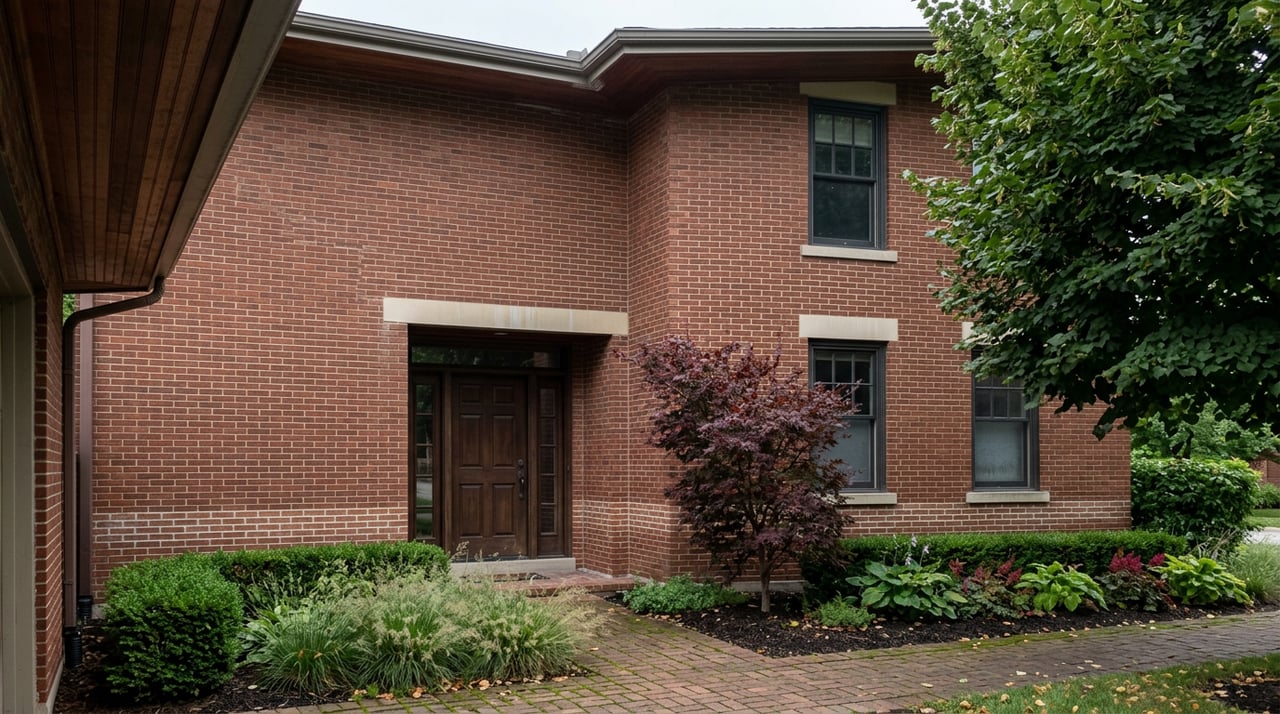
Notice that Columbia's listing acknowledges something worth knowing before you shop there: the district also contains several dozen buildings that don't contribute to its historic character, including modern homes built after the war. The review authority doesn't care about that distinction. The ordinance applies to any property inside a designated historic district, not just the ones the National Register calls historically significant. Buy a 1962 ranch that happens to sit inside the Columbia district boundary, and your new deck still goes through the same Commission that reviews a wraparound porch on an 1870s Cream City brick house next door.
The clearest local picture of what Landmarks Commission review is meant to produce comes from the Town of Cedarburg's own Landmarks Commission and Town Board, which recognized the restoration of 1302 Washington Avenue with a 2024 Landmark Preservation Award, co-won by building owners Wayne and Joan Houpt of Suburban Motors Harley Davidson and by Toast Restaurant. That property falls under the Town's jurisdiction rather than the City's Washington Avenue Historic District profiled above, but the discipline behind it is the same one any City historic-district buyer will be asked to follow: plan the exterior work around the materials and proportions already on the block, and bring it to the Commission before the contractor shows up, not after.
If you're buying with renovation plans already sketched out, that's the model to aim for. Local design-build firms that specialize in Cedarburg's older housing stock, like RNB Design Group, market themselves specifically around restoring Cream City brick interiors and matching additions to a home's original era. Firms like that exist because this review process rewards planning ahead rather than asking forgiveness later.
None of this would carry much urgency in a slow market, where a buyer has months to research before writing an offer. That's not the market Cedarburg is in right now. As of August 2026, the median home price in Cedarburg sits at $565,000, with average sale prices running higher at $622,318. In March 2026, homes were selling in a median of 39 days, down from 51 days the year before, with roughly a month and a half of supply on the market, a fraction of the five months usually considered a balanced market, and sale prices landing at or above list rather than sitting long enough to get discounted.
That pace matters here specifically because the historic-district approval process is not something you can shortcut with speed. The Commission works from its own meeting calendar, documented in its own published minutes, not on a same-day or even same-week basis. A buyer who's used to a fast-moving conventional purchase, inspection, financing, close, walk in, start renovating, will hit a step in Cedarburg's historic core that simply doesn't move at conventional-market speed. Knowing that before you write the offer, not after you've already budgeted a six-week turnaround for new windows, is the difference between a smooth first year of ownership and a frustrating one.
Does the rule only apply to the "historic" houses, or every house inside the boundary? Every house inside the boundary. Columbia Historic District's own National Register documentation notes it contains buildings that don't contribute to its historic character, including newer homes. The Commission's authority attaches to the district line on the map, not to whether your specific house made the nomination's list of significant structures.
Is this separate from my regular building permit, or instead of it? In addition to it, not instead of it. A building permit application involving a property inside a historic district gets filed with the Commission as part of the normal permitting path. You're not choosing between two processes. You're going through both, in sequence.
If you're weighing a historic-district property in Cedarburg, whether it's a Washington Avenue storefront-adjacent home or a Columbia Road cottage with a century of Cream City brick behind the paint, the house itself is only half the picture. The other half is understanding what you can and can't do to its face once it's yours, and building your renovation timeline around a Commission calendar instead of a contractor's calendar.
Brynn Woll works this market from the inside, with the sold history and local relationships to help you price a historic-district property honestly, plan renovations that will actually clear review, and move fast when the right house comes up. Schedule a call or get your instant home valuation to start the conversation before you're competing for the next one.
Stay up to date on the latest real estate trends.

Brynn is committed to providing personalized and comprehensive real estate services, ensuring a seamless and successful experience for every client.
BRYNN WOLL
W63N706 WASHINGTON AVE CEDARBURG WI 53012